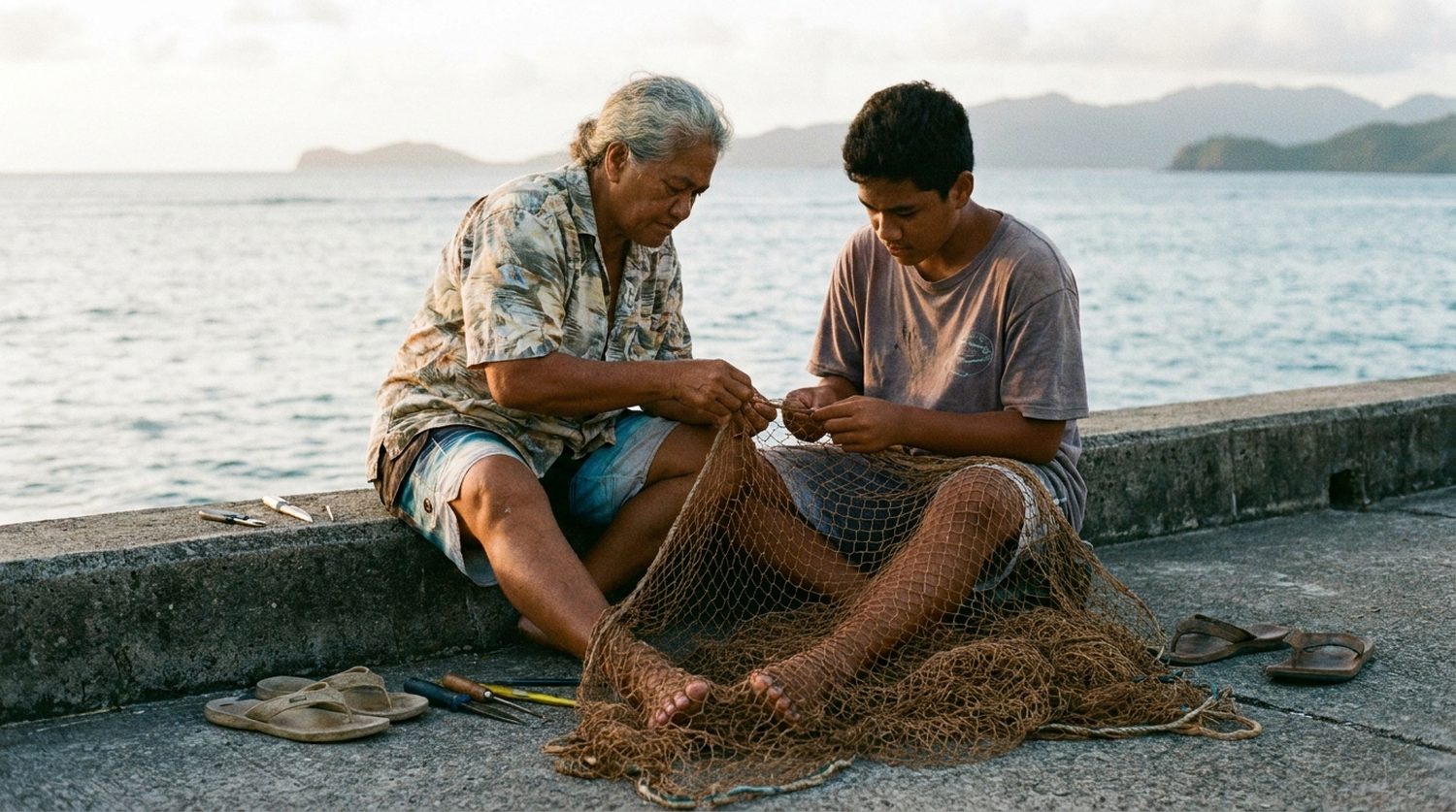
Shared Abundance
Everything we need already exists in our communities.

Exchange Ave exists to reconnect communities to each other through exchange rather than money — reawakening ancestral practice with infrastructure that can carry it at scale.

To circulate abundance so it does not sit unused, and to make the strengths of a community visible to itself.

To give Indigenous and native communities exchange infrastructure they own outright — federated, interoperable, and free of advertising, data sales, and extractive capital.

A living map of trade routes between peoples, where a need in one community is met by surplus in another without either losing sovereignty.
Mai ka piko a ka moana.
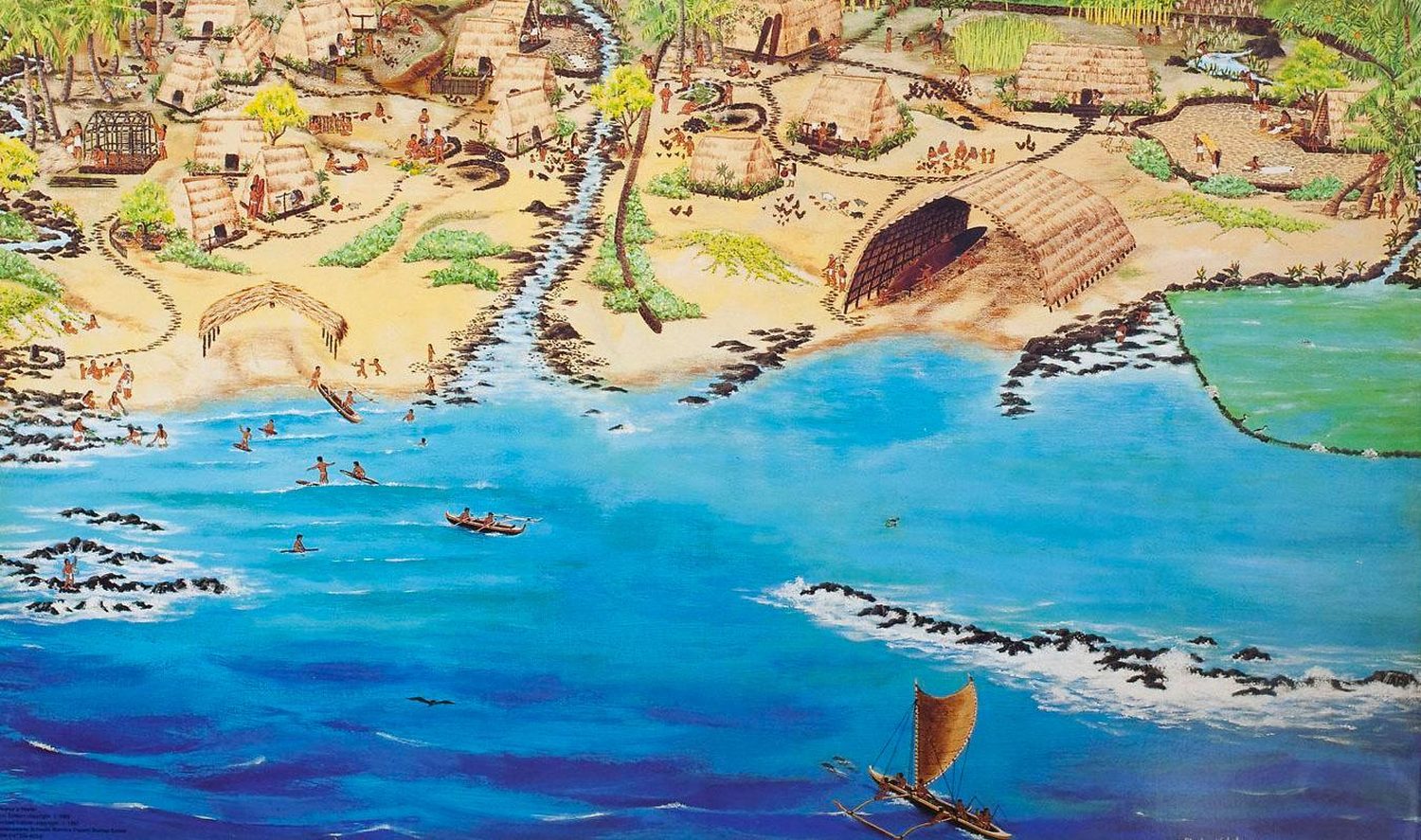
An ahupuaʻa was a wedge of land running from the mountain peak to the reef. Inside it lived everything a community needed: uplands for timber and birds, middle lands for kalo and ʻuala, shoreline and sea for fish and salt. Families at different elevations traded constantly — not as commerce but as obligation. Konohiki managed flow. Kapu managed limits.
What made it work was not scarcity management. It was relationship. You gave upstream because you would receive downstream, and everyone could see the whole system.
Every design decision in Exchange Ave traces back to that: local governance over central control, visible reciprocity over hidden pricing, limits that a community sets for itself, and boundaries that hold data inside the place it came from.
The pillars that guide every exchange in our network.
Everything we need already exists in our communities.
Care is a communal practice, not a transaction.
Using resources wisely and circulating them effectively.

Rebuilding trust between neighbors and global allies.

Sovereign infrastructure owned and governed by communities.

A living practice carried through every exchange.
Attention is not for sale here. A feed tuned to engagement would deform every relationship the platform is meant to hold.
Community data stays with the community. Each node holds its own records under its own governance, following CARE principles for Indigenous data.
We do not take investment that requires us to sell the network or squeeze the nodes. Growth follows readiness, not a funding clock.
A network sets its own categories, language, rules, and tokens. We supply the engine and the standard, never the culture.
Exchange Ave is anchored at Puʻuhonua o Waimānalo — the land base of the Nation of Hawaiʻi and the place where the first exchanges ran before any of this was software.
That anchoring is not sentiment. It means the platform is accountable to a specific community on a specific ʻāina, with kūpuna who can tell us when we have gotten it wrong. Every network that joins carries the same expectation in its own place.